/
/





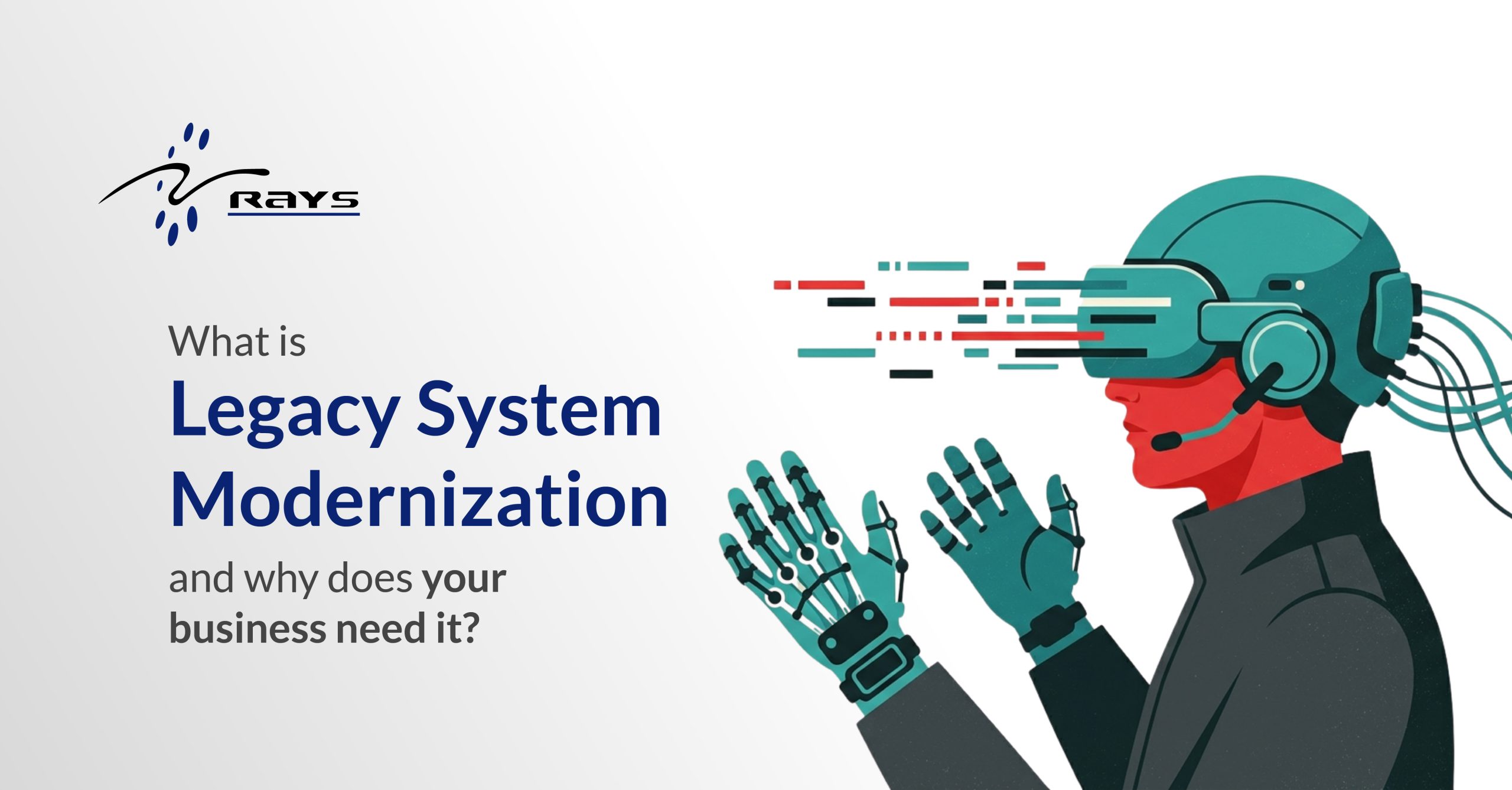
Legacy System Modernization: What It Is and Why You Can’t Afford to Wait
Technology debt now consumes 40 – 50% of total IT investment at the average enterprise, and most companies undercount that figure by 40 – 60% because the costs are buried across dozens of budget lines. If your engineers are spending more time keeping old systems alive than building new capabilities, you are not running an IT department you are running a maintenance operation. This post explains what legacy system modernization actually involves, why the business case is stronger in 2026 than it has ever been, and how to approach it without betting the company on a single high-risk rewrite.
Why Legacy Systems Are a Bigger Problem Than Most Boards Realise
The phrase “legacy system” gets used loosely, but the definition matters for making a credible business case. A legacy system is any software or infrastructure that cannot be efficiently updated, integrated with modern tools, or scaled to meet current demand regardless of its age. Some ten-year-old platforms are perfectly modern. Some systems built in the 1990s are still powering core banking operations at institutions with billions in revenue.
The scale of the problem in 2026 is striking. Enterprises spend between 60 and 80% of their IT budgets on maintaining existing systems, leaving less than 30% for growth and innovation . The US federal government represents the extreme case: a 2025 GAO report found 79% of a $105 billion-plus annual IT budget consumed by operations and maintenance with only three of ten previously flagged critical legacy systems modernised since 2019.
For startup founders and engineering managers, the trap is subtler. Legacy does not always look like a mainframe. It can be a five-year-old monolith that no one will touch, a custom-built CRM that only two engineers understand, or a data pipeline held together with scripts that predate your current team. The cost is the same: slower releases, higher security exposure, and an architecture that blocks every AI initiative you are trying to prioritise.
What Legacy System Modernisation Actually Involves
Modernisation is not a synonym for rewriting everything from scratch. That is one option and usually the riskiest one. Experienced teams recognise six main approaches, and the right choice depends on the system, the business criticality, and the timeline for ROI.
Re-platforming moving to a modern cloud infrastructure without changing the core application logic held the largest share of modernisation approaches at 32% in 2024. It carries lower execution risk and shows faster returns than a full rebuild. Re-architecting, which involves restructuring a monolith into modular or microservices-based components, is the fastest-growing approach, projected at a 23% CAGR through 2030.
The case for a phased, business-case-led programme is well established by now. Organisations that fix their highest-impact systems first typically reach positive ROI in 12-14 months. Full rewrites, by contrast, tend to take 36-48 months before they generate a return and they carry a significantly higher failure rate. The organisations that get modernisation right are those that resist the temptation to fix everything simultaneously, and instead treat it as a structured, iterative programme tied to measurable business outcomes.
A Real-World Proof Point: What Modernisation Delivers in Practice
The ROI data from completed enterprise projects in 2024-2025 is now documented, and the numbers are consistent. McKinsey’s 2026 research reports 30-50% infrastructure cost reductions post-modernisation, alongside a 20-30% improvement in development cycle times following legacy-to-cloud migration. Kyndryl’s 2025 State of Mainframe Modernisation survey puts ROI at 288% for organisations that modernised applications on the mainframe rather than replacing the mainframe entirely.
A useful case is the UK retail banking sector, where several mid-market lenders migrated away from COBOL-based core banking systems over 2023-2025. The institutions that used a phased re-platforming approach rather than a full rebuild cut time-to-market for new products from months to weeks, reduced per-transaction processing costs materially, and opened integrations with open banking APIs that their legacy architecture had made impossible.
“When maintenance consumes 70–80% of IT capacity, almost nothing is left for product work. Modernised systems flip that ratio.”
The competitive implication is direct. Every quarter a company runs a legacy architecture, a competitor running a modern stack ships faster, integrates AI tooling more easily, and attracts engineers who want to work with current technology rather than maintain systems they did not build.
Rays TechServ delivers custom software development and legacy modernisation programmes for technology companies across the US and UK. With teams experienced in cloud migration, microservices architecture, and API-led transformation, they help businesses modernise incrementally without disrupting live operations.
The Contrarian View: “If It Works, Don’t Touch It” Is Now a Dangerous Strategy
Half of organisations still run legacy systems because they technically work. This reasoning was defensible five years ago. It is not defensible in 2026.
The first problem is security. Companies running legacy systems are 40% more likely to experience compliance failures, and healthcare organisations with unpatched legacy systems face average breach detection timelines of 279 days. GDPR fines for UK and EU businesses, and HIPAA exposure for US healthcare companies, have made “it works” an incomplete risk assessment.
The second problem is talent. Engineers with the skills to maintain COBOL, legacy Oracle systems, or 15-year-old Java monoliths are retiring faster than they are being replaced. Running a critical system on a skill set that is actively disappearing from the labour market is an operational risk that does not show up on a balance sheet until it becomes a crisis.
The third problem and the one most relevant for US and UK tech companies right now is that legacy architecture blocks AI adoption. You cannot bolt modern ML pipelines onto a monolith that was not designed for them.
How to Build the Business Case and Know When to Start
If you are trying to decide whether modernisation is the right move now, run this four-question diagnostic before commissioning a full assessment:
- What percentage of your IT budget goes to maintenance? If the answer is above 60%, you are already in the danger zone. The industry average for modernised organisations is 25-40%.
- How long does it take to ship a feature? If a change to a core workflow takes weeks, the architecture is the constraint not the team.
- Are security patches being deferred? End-of-life systems that cannot receive updates are liabilities, not assets.
- Is your legacy architecture blocking a specific growth initiative? If AI integration, cloud scalability, or a new product line is being stalled by the current stack, that is a quantifiable opportunity cost, not just a technical problem.
The most effective modernisation programmes start with a portfolio audit that identifies which systems to retire, which to re-platform, and which to re-architect. Retiring unused applications first portfolio audits typically find 15-30% of applications are retirement candidates reduces the scope and cost of everything that follows.
The Bottom Line on Legacy System Modernisation
Legacy system modernisation is not a technology project it is a business decision with a measurable financial return. The cost of staying still in 2026 includes compounding maintenance spend, security exposure, talent risk, and the AI capabilities your current architecture cannot support. The organisations moving fastest are not replacing everything; they are running phased programmes that deliver ROI within 12–14 months and free their engineering teams to build rather than maintain.
Is Your Architecture Holding Your Business Back?
Rays TechServ builds cloud and DevOps modernisation roadmaps for technology companies and mid-market businesses across the US and UK - from initial audits to full cloud migration and re-architecture. If your team is spending more time maintaining than building, this is where to start.