+1 (301) 610-3555
 +1 (301) 610-3555
 +91 70161 27118



The way people search online has changed dramatically.
A few years ago, users typed keywords into Google and clicked through websites. Today, many people ask ChatGPT, Google AI Overviews, Gemini, Copilot, and Perplexity for direct answers before ever visiting a website.
This shift means businesses can no longer rely on SEO alone.
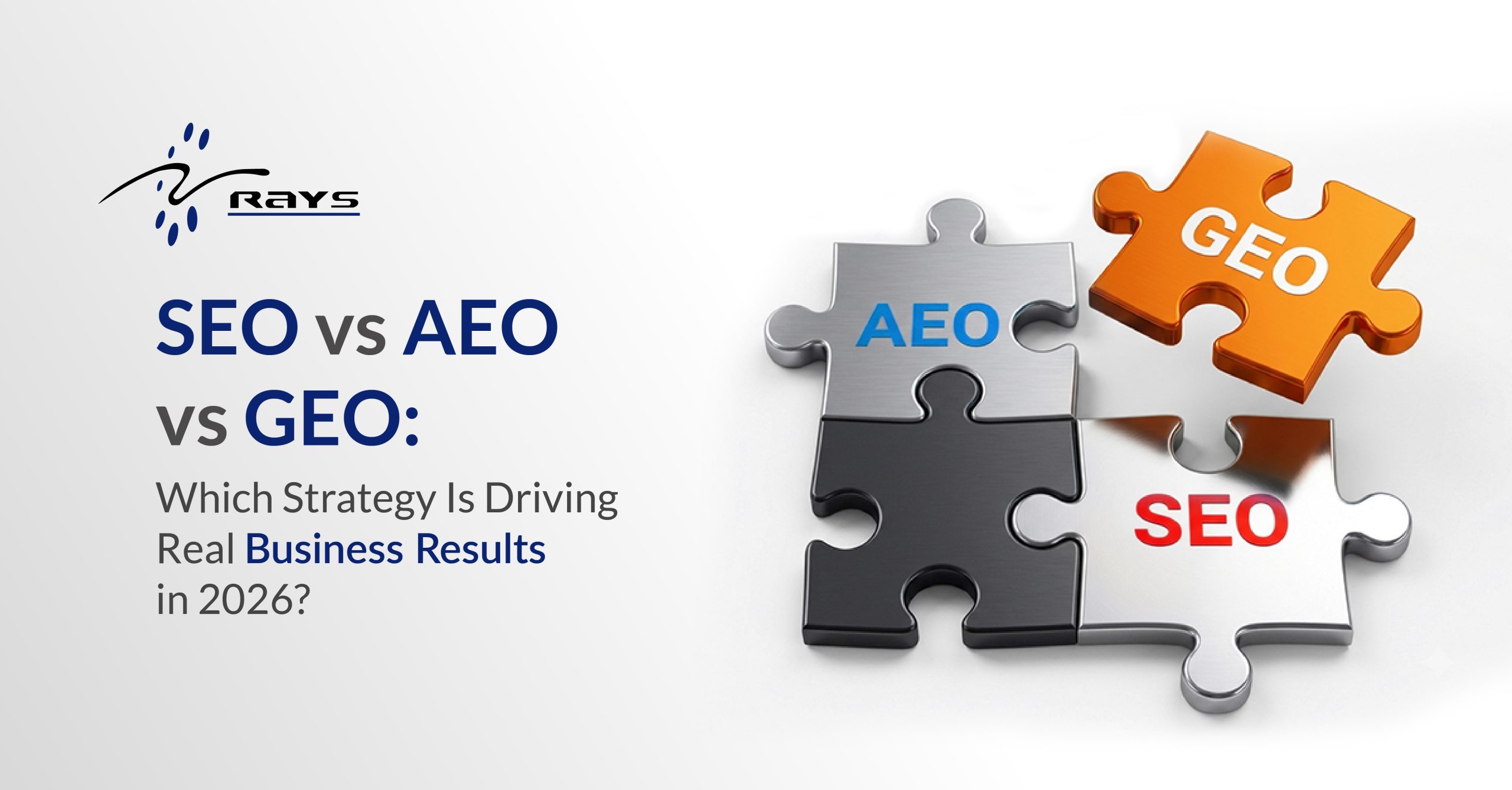
To stay visible in 2026, businesses need a strategy that combines Search Engine Optimization (SEO), Answer Engine Optimization (AEO), and Generative Engine Optimization (GEO).
But what do these terms mean, and which one delivers the best results?
Let’s explore.
What Is SEO?
Search Engine Optimization (SEO) is the process of improving your website’s visibility on search engines like Google and Bing.
The goal is to rank higher for relevant keywords and attract organic traffic.
SEO focuses on:
- Keyword optimization
- High-quality content
- Technical SEO
- Website speed
- Mobile responsiveness
- Internal linking
- Backlinks
- User experience
Best for:
- Driving long-term organic traffic
- Increasing website visibility
- Generating qualified leads
- Building domain authority
What Is AEO?
Answer Engine Optimization (AEO) is the practice of creating content that directly answers users’ questions.
Instead of simply ranking on Google, AEO helps your content appear in:
- Google Featured Snippets
- Google AI Overviews
- Voice Search
- “People Also Ask” results
- Smart assistants
AEO focuses on:
- Frequently Asked Questions
- Clear headings
- Short, accurate answers
- Structured content
- Schema markup
- Conversational language
Example
Instead of writing:
SEO improves rankings.
Write:
What is SEO?
SEO is the process of improving a website’s visibility in search engines through content optimization, technical improvements, and authority building.
This format is easier for search engines and AI assistants to understand.
What Is GEO?
Generative Engine Optimization (GEO) is the next evolution of digital visibility.
It focuses on optimizing your content so AI-powered platforms such as:
- ChatGPT
- Google AI Mode
- Gemini
- Microsoft Copilot
- Perplexity AI
can understand, reference, and recommend your content when answering user questions.
Unlike traditional SEO, GEO isn’t just about ranking, it’s about becoming a trusted source that AI systems choose to cite.
GEO focuses on:
- Comprehensive content
- Topical authority
- Entity optimization
- Clear context
- EEAT (Experience, Expertise, Authoritativeness, Trustworthiness)
- Accurate and structured information
Which Strategy Delivers Better Results?
The answer is simple:
All three.
Each strategy serves a different purpose.
Choose SEO if you want:
- More organic traffic
- Better keyword rankings
- Long-term visibility
Choose AEO if you want:
- Featured snippets
- Voice search visibility
- Better question-based rankings
Choose GEO if you want:
- AI platforms to reference your business
- Greater visibility in AI-generated answers
- Future-ready digital marketing
Businesses that combine all three strategies gain the greatest competitive advantage.
Why SEO Alone Is No Longer Enough
Modern search has evolved beyond keywords.
Users now ask questions like:
- Which software development company is best?
- How can AI improve my business?
- What is the cost of custom software?
- Which digital marketing strategy works best?
AI platforms provide direct answers by pulling information from trusted, well-structured content.
If your content isn’t optimized for AEO and GEO, your business may miss valuable visibility, even if your website ranks well in traditional search results.
How to Optimize for SEO, AEO & GEO
To build a future-ready content strategy:
- Write helpful, original content that solves real business problems.
- Target keywords naturally without keyword stuffing.
- Answer common customer questions with dedicated sections.
- Use clear H1, H2, and H3 headings.
- Add FAQ sections to important pages.
- Build topical authority by publishing related content consistently.
- Improve page speed and mobile usability.
- Strengthen internal linking between related articles and services.
- Demonstrate expertise with case studies, insights, and practical examples.
- Keep content updated to reflect the latest trends and technologies.
Benefits of Combining SEO, AEO & GEO
A combined strategy can help businesses:
- Increase organic website traffic
- Improve Google rankings
- Earn featured snippets
- Appear in AI-generated search results
- Build trust and authority
- Generate more qualified leads
- Improve user experience
- Stay competitive as search evolves
Frequently Asked Questions
What is the difference between SEO, AEO, and GEO?
SEO improves website rankings in search engines, AEO helps content appear as direct answers in search results, and GEO optimizes content so AI platforms can understand and reference it in generated responses.
Is SEO still relevant in 2026?
Yes. SEO remains the foundation of online visibility, but combining it with AEO and GEO creates a more comprehensive strategy for modern search.
Why is GEO important?
As AI-powered search tools become more popular, GEO helps your content reach users through AI-generated answers, expanding your brand’s visibility beyond traditional search results.
Can small businesses benefit from SEO, AEO, and GEO?
Absolutely. Businesses of all sizes can improve discoverability, attract qualified traffic, and build credibility by using these strategies together.
Why Choose Rays TechServ?
At Rays TechServ, we help businesses grow with SEO, AEO, GEO, AI-powered digital marketing, and custom technology solutions. With 20+ years of experience, we build strategies that improve online visibility, attract qualified leads, and drive sustainable growth.
Conclusion
The future of search goes beyond Google. By combining SEO, AEO, and GEO, businesses can improve search rankings, increase AI visibility, and stay ahead in the evolving digital landscape. Investing in all three strategies today will help your business remain discoverable and competitive tomorrow.